
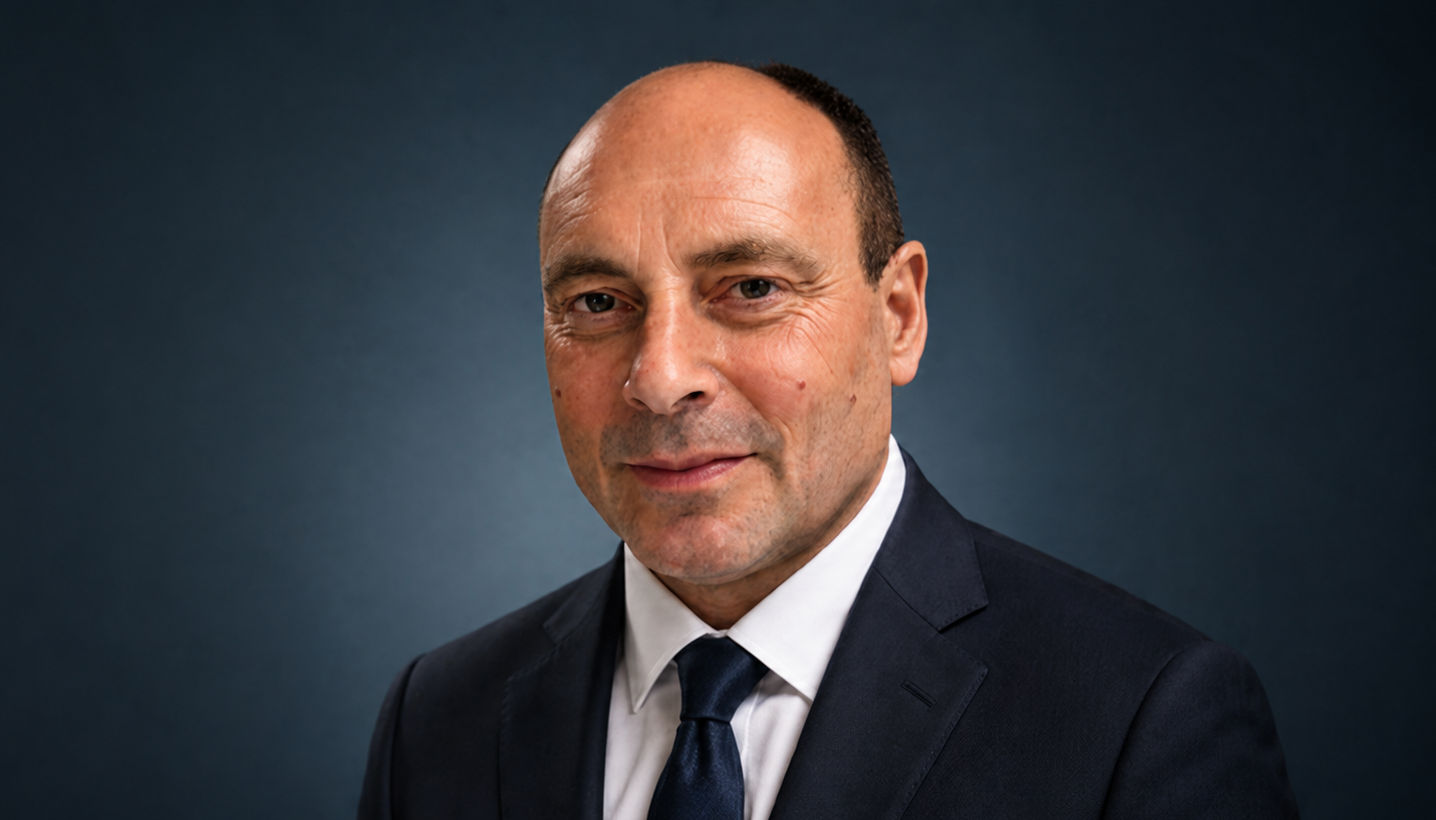
Delivering complex mental health trials at scale: Insights from KHP Chief Investigator Prof James MacCabe
Professor James MacCabe is a Consultant Psychiatrist and Clinical Academic based at South London and Maudsley NHS Foundation Trust, Europe’s largest mental health research centre. As an experienced King’s Health Partners (KHP) Chief Investigator on both commercially sponsored and non-commercial studies, he works closely with the King’s Health Partners Clinical Trials Office (KHP-CTO) to deliver complex trials in psychosis across diverse, real-world populations.
Working at the intersection of NHS care, academia and industry, he offers a practical perspective on how commercial sponsors can successfully design and deliver trials in complex mental health populations.
Psychiatry and Epidemiology
How did you move into both psychiatry and epidemiology?
JM:“I trained in medicine and developed a strong interest in psychology early on, which led me into psychiatry. My interest in psychosis led me to explore questions at a population level, which naturally drew me into epidemiology.”
Patient & participant engagement in Psychosis trials
How difficult is it to engage and retain participants in trials, particularly in psychosis?
JM: “It’s extremely difficult and that’s one of the biggest challenges that we have in psychiatry, particularly in the field of psychosis.
A lot of the clinical trials infrastructure is built around very motivated patients but with psychosis, we’re often dealing with people that mistrust services…
They might not have much insight into their illness, which makes engagement very difficult.
Another issue is that people with psychosis often lack capacity, which presents additional challenges in trial recruitment.
This is why working with experienced delivery partners that understand these populations is critical to successful recruitment and retention.”
Prof James MacCabbe
A lot of the clinical trials infrastructure is built around very motivated patients but with psychosis, we’re often dealing with people that mistrust services…
On overcoming patient participation barriers
Are there ways to overcome those barriers, and how does this differ between commercial and non-commercial studies?
JM: “As part of NIHR-funded research we’ve been using legal representatives, which significantly improves recruitment rates. In one trial I’m leading, over 50% of participants were recruited this way.
However, this remains a particular challenge in commercial trials, where protocols may not allow this approach.
I think the UK is actually quite far ahead in this regard… and at King’s Health Partners, we have established, proven processes to safely include underrepresented populations.
This presents a clear opportunity for commercial sponsors to improve recruitment and access broader, more representative patient populations.”
AI in Clinical Trials
How are you using AI in your trials?
JM: “AI is helping us identify eligible participants at scale across large NHS populations, significantly accelerating recruitment timelines.
We’re working with electronic health records to identify patients who meet complex inclusion criteria…
We’re also developing large language models that can determine treatment response and identify eligible participants.
Importantly, we use secure, locally deployed models to ensure high standards of data governance, which is critical for sponsor confidence.”
Prof James MacCabbe
Sponsors who bring strong early data and differentiated approaches are best positioned to succeed in complex psychiatric trials
The role of strong data in trial success
If a pharmaceutical or biotech company approached you with the opportunity to run a trial, what would make you say yes?
JM: “The opportunities I’ve taken forward have typically shared two key features: a novel mechanism of action and early evidence of efficacy, particularly in treatment-resistant populations.
Sponsors who bring strong early data and differentiated approaches are best positioned to succeed in complex psychiatric trials.
Reducing side effects is also critical, as this allows greater flexibility in treatment options… and ultimately improves outcomes for patients.”
On emerging approaches to clinical trials
What emerging approaches are you most interested in?
JM: “Target trial emulation is an important way forward…
It allows us to complement clinical trials with large-scale observational data, helping generate supportive evidence faster and at scale.”
Prof James MacCabbe
“I would like to see much closer integration of trials within routine clinical care, so participation becomes the norm rather than the exception. This would support faster recruitment, more representative populations, and ultimately more generalisable results for sponsors.”
On the evolution of clinical trials for faster treatments
How should clinical trials evolve to deliver treatments faster?
JM: “The current model is often burdensome and bureaucratic.
I would like to see much closer integration of trials within routine clinical care, so participation becomes the norm rather than the exception.
This would support faster recruitment, more representative populations, and ultimately more generalisable results for sponsors”
Practical changes to address patient disengagement
What practical changes could address that?
JM: “Simplifying trial information is key.
When patients are given very long information sheets, they often don’t engage with them.”
Clearer, simpler materials can improve understanding and enrolment rates.
I also think incentivising clinicians to refer patients is important…
Embedding research into clinical roles would reduce barriers and improve recruitment efficiency.”
The role of the KHP-CTO in modern effective clinical trials
What would make your life easier as a Chief Investigator?
JM: “A highly responsive and proactive Clinical Trials Office is critical.
The work KHP-CTO does is truly appreciated — particularly its responsiveness and ability to provide tailored training and support.
This kind of partnership helps investigators and sponsors overcome challenges quickly and maintain study momentum.
One area that would help further is upfront funding to support recruitment infrastructure…
Dedicated recruitment resource can significantly improve performance and is often cost-effective for sponsors.”
Prof James MacCabe
“The work the KHP-CTO does is truly appreciated – particularly its responsiveness and ability to provide tailored training and support. This kind of partnership helps investigators and sponsors overcome challenges quickly and maintain study momentum.”
If you’re interested in working with Prof MacCabe on a clinical trial, or with any of the other thought-leaders at King’s Health Partners, please email khpctocommercial@kcl.ac.uk and mark for the attention of Craig Macpherson, Head of Operations.