
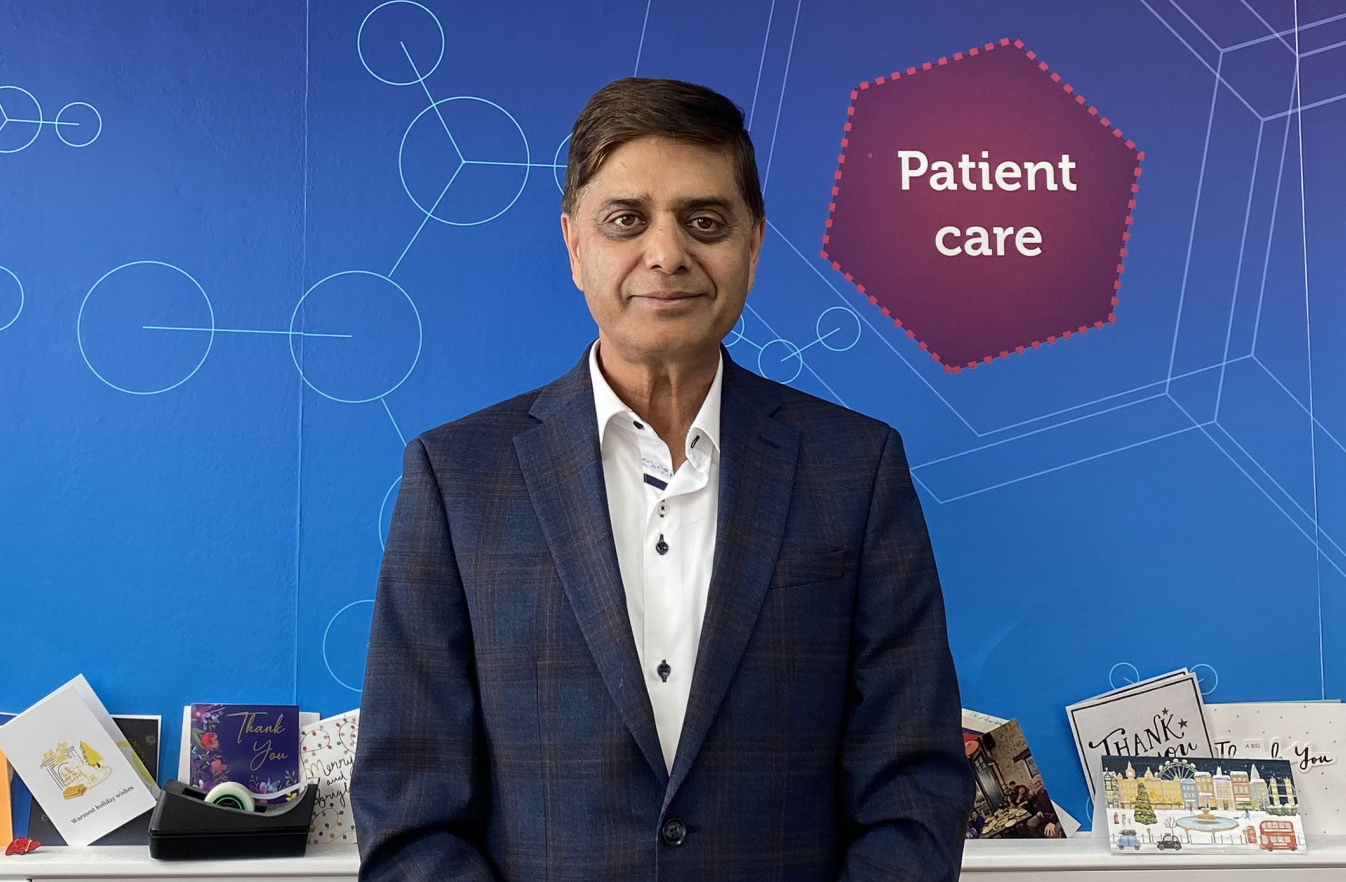
Prof Anil Dhawan
By 2050, I expect clinical trials to be digitally driven, decentralised and no longer constrained by geographical boundaries.”
Rethinking clinical trials for a global future: Insights from KHP Chief Investigator Prof Anil Dhawan
DS: What clinical trial would you run if time, money and bureaucracy weren’t factors?
AD: “If I have these three things – and I would keep regulations at the centre of any trial because they’re important – I think I would pursue a massive global lifelong preventive clinical trial aimed at preventing noncommunicable diseases. A century ago, infectious diseases caused a much greater proportion of deaths than they do today, particularly among infants and children. Deaths from conflict also rose dramatically during periods such as the two world wars.
Today, most deaths globally are caused by noncommunicable diseases, particularly cardiovascular disease, cancer, chronic respiratory disease and diabetes. Many of these conditions are influenced by lifestyle factors such as smoking, diet, alcohol consumption, physical inactivity and obesity. This is where I’d focus. The trial should be global because the benefits should be global. Too much research comes from resource-rich Western populations, but the world is far more diverse than that. A truly inclusive trial would reflect racial, genetic, dietary and environmental differences, making the findings relevant to everyone. That’s why I’d run a large-scale, lifelong, preventive global clinical trial.
DS: How do you see AI transforming clinical trials, and what are your thoughts on the use of AI in research practice?
AD: Artificial intelligence has the potential to transform clinical trials by automating many aspects of data collection, data analysis and quality assurance. While much of this work is already computerised, current systems still rely on researchers to determine the appropriate analytical methods and interpret the results.
AI can also streamline clinical workflows by helping to identify suitable participants, analyse patient histories and support decision-making throughout the trial process. In many respects, AI is already becoming part of clinical research, and its role will continue to expand. However, I do not believe AI will eliminate the need for human involvement. Researchers will continue to play a critical role in designing studies, interpreting findings and exercising clinical judgement.
Instead, AI should be seen as a tool that enables researchers to spend less time on routine administrative and analytical tasks, allowing them to focus on scientific discovery and patient care. As the technology matures, it is likely to improve the efficiency, quality and consistency of clinical trial data collection, analysis and recommendations.
DS: How should the clinical trial landscape evolve so that we can deliver effective therapies and treatments more quickly?
AD: “Advances in artificial intelligence, next-generation sequencing and other emerging technologies are transforming the way clinical trials are conducted. However, the sector has traditionally relied on established models, particularly the sequential randomised controlled trial, which remains the gold standard for evaluating new treatments.
While randomised controlled trials will continue to play an important role, I believe we are moving towards a more digital, patient-centred approach to clinical research. Rather than progressing through distinct phases in isolation, clinical development could become a more seamless process, enabling patients to transition more efficiently from one stage of research to the next. A more integrated clinical trial ecosystem has the potential to accelerate the development of new therapies while making research more inclusive and accessible.”
On emerging trial designs and the role of wearable biosensors in future clinical trials
DS: If you could redesign the clinical trial model from scratch, what would it look like?
AD: I would design a decentralised clinical trial system that allows patients to participate regardless of where they live. Traditional trials often require participants to travel to specialist centres, which inevitably limits access and excludes many people who would otherwise be eligible. Digital technologies can remove many of these barriers. For example, electronic consent (e-consent) enables patients to complete the consent process remotely, reducing the need for face-to-face appointments while maintaining appropriate oversight and governance. I believe clinical research will increasingly move towards decentralised models that make participation more convenient for patients while improving access to clinical trials.
DS: When you talk about decentralised trials, does that also expand the catchment area for trial participation?
AD: Absolutely. Decentralised trials have the potential to make clinical research genuinely global. A patient living in Africa, India or any other part of the world should be able to participate in a study if they meet the eligibility criteria, rather than being excluded simply because of where they live. Clinical research is often organised within national or regional boundaries, whether funded by pharmaceutical companies, charities or public research organisations. However, the diseases we are trying to treat do not recognise those boundaries, and neither should the research designed to address them.
Greater decentralisation would enable studies to recruit more diverse populations, producing evidence that is applicable across different ethnic, genetic, dietary and environmental backgrounds. Too often, new therapies are evaluated primarily in Western populations before being adopted more widely. A more globally representative approach would improve our understanding of how treatments perform across the populations that will ultimately use them.
DS: What emerging trial designs, such as adaptive, platform, basket or umbrella trials, excite you the most, and why?
AD: “There isn’t a single trial design that is appropriate for every study. The most effective approach depends on the disease being investigated and the research question being asked.
For common conditions such as hypertension or diabetes, conventional trial designs can be highly effective because they involve large patient populations. However, rare diseases present a very different challenge. In these settings, patient numbers are often too small for traditional randomised controlled trials to be practical, making more flexible approaches essential.
This is where adaptive trial designs and master protocols, including basket and umbrella trials, become particularly valuable. Basket trials evaluate a single therapy across multiple diseases or patient groups that share common characteristics, while umbrella trials assess multiple therapies within a single disease.
These innovative designs offer significant opportunities to accelerate research, but they also present regulatory challenges. Evaluating multiple treatments simultaneously can make it more difficult to attribute efficacy and adverse effects to a specific intervention, which is why regulators have traditionally taken a cautious approach.
As regulatory frameworks continue to evolve, these trial designs are likely to become increasingly important. Ultimately, the most appropriate design will always depend on the condition being studied, the treatment being evaluated and the scientific question the trial is seeking to answer.”
DS: What kinds of clinical questions are currently impossible to answer with conventional trial designs?
AD: Conventional clinical trial designs are typically conducted in carefully selected patient populations. To demonstrate a treatment’s efficacy, studies often exclude patients who are at higher risk or who have more complex medical conditions. While this approach is important for establishing whether a treatment works under controlled conditions, it does not always show how well it performs in routine clinical practice.
This highlights the distinction between efficacy and effectiveness. A conventional trial may demonstrate that a treatment is efficacious, but it cannot fully answer how effective it will be across the broader, more diverse patient populations encountered in real-world healthcare.
Traditional trial designs also have limitations when studying very rare diseases. With only a small number of eligible patients, randomisation may not be feasible, making it difficult to answer important clinical questions using conventional methodologies. In these situations, alternative trial designs and natural history studies may be more appropriate.
DS: How is efficacy different from effectiveness?
AD: Efficacy refers to how well a treatment works under the controlled conditions of a clinical trial. These studies are designed to determine whether an intervention produces the intended effect in a carefully selected group of participants. Effectiveness, by contrast, describes how well that treatment performs in routine clinical practice, where patients are more diverse and conditions are less controlled.
Ultimately, the goal is to understand a treatment’s real-world effectiveness. However, establishing efficacy through clinical trials is the essential first step before effectiveness can be evaluated.
DS: What role will wearable biosensors play in the next generation of clinical trials?
AD: Wearable biosensors are central to my vision for decentralised clinical trials. These technologies can continuously collect physiological data, such as heart rate, respiratory rate, blood pressure, physical activity, sleep patterns and, in some cases, glucose levels, while patients go about their everyday lives.
Rather than relying solely on measurements taken during scheduled visits to a clinical research facility, wearable devices allow researchers to monitor participants in real-world settings. This provides a more accurate picture of a patient’s health and how they respond to treatment outside the controlled environment of a clinic.
Traditional clinical research facilities are, by necessity, highly controlled environments. While this is important for ensuring consistency, it does not always reflect how patients live from day to day. Wearable biosensors offer the opportunity to collect continuous, real-world data remotely, reducing the need for frequent hospital visits while enabling closer monitoring throughout a clinical trial.
As these technologies continue to develop, I believe they will become an increasingly routine part of clinical research and help support the wider adoption of decentralised trial models.
On biosensors and the future of clinical trials
DS: Are these biosensors readily available for use in clinical trials?
AD: Many of these technologies are already available, but most have not yet received the regulatory approvals required for routine clinical use.
DS: Why is that?
AD: The main reason is regulatory oversight. Many wearable devices can collect a wide range of physiological data, but they are marketed as consumer products rather than medical devices. As a result, they often carry disclaimers stating that they should not be used for medical decision-making. This is an important safeguard. Before clinicians can rely on data generated by these devices, their accuracy, reliability and safety must be rigorously evaluated through the appropriate regulatory processes. While some functions, such as blood pressure monitoring, have received regulatory approval, many others are still undergoing validation.
DS: What happens when people place too much confidence in these devices?
AD: Without appropriate validation, wearable devices can generate false alarms or findings that have little clinical significance. This can cause unnecessary anxiety and prompt people to seek medical advice for results that may not indicate a genuine health problem. These devices should therefore be viewed as indicators rather than diagnostic tools. As the technology matures and receives the necessary regulatory approvals, its accuracy and clinical usefulness will continue to improve, allowing it to play a greater role in healthcare and clinical research.
DS: How do consumer wearables, such as the Apple Watch, compare with dedicated biosensors?
AD: Consumer wearable devices already provide useful health information, including measures such as heart rate, physical activity and, in some cases, sleep patterns and respiratory rate. They are valuable tools for monitoring general wellbeing and encouraging healthy behaviours. One of their greatest strengths is the scale of the data they collect. Millions of users generate continuous health information that can be analysed to identify patterns and trends. Combined with advances in artificial intelligence, these data have significant potential to improve our understanding of health and disease.
However, there remains an important distinction between consumer health data and clinically validated medical information. Before these devices can be used routinely in clinical trials or patient care, their measurements must meet the regulatory standards required for medical devices. Cost and accessibility are also important considerations. These technologies must remain affordable if they are to deliver benefits at population level, rather than being available only to a small number of people.
DS: Is there potential for technology companies to work more closely with clinicians?
AD: Yes, continuous glucose monitoring is a good example. Data is collected by wearable sensors, and it’s shared directly with healthcare professionals to support patient management. As wearable technologies continue to evolve and receive regulatory approval, closer collaboration between technology companies, clinicians and researchers is becoming increasingly common, creating new opportunities to improve both clinical care and the delivery of clinical trials
DS: What do you think clinical trials will look like in 2050?
AD: By 2050, I expect clinical trials to be digitally driven, decentralised and no longer constrained by geographical boundaries. Advances in technology will enable continuous monitoring through wearable devices, allowing researchers to collect real-world data in real time rather than relying solely on scheduled visits to research centres.
The traditional phased approach to clinical trials is also likely to evolve, although phase I studies, which establish the safety of a treatment in humans, will remain an essential first step. Beyond that, however, I anticipate a more integrated and seamless clinical development pathway, supported by digital technologies, centralised monitoring and electronic consent. Overall, clinical trials are likely to become more efficient, more inclusive and more reflective of real-world patient experiences.
DS: Are there any recent scientific discoveries that you’re particularly excited to see translated into clinical trials over the next decade?
AD: One of the most exciting developments has been the progress of gene therapy for inherited diseases. This is an area that has fascinated me since medical school in the 1980s, and after decades of research we are now seeing these therapies translate into clinical practice. The early clinical results are extremely encouraging and represent an important milestone in the treatment of genetic disorders. From my own perspective as a liver specialist, I am particularly excited by the potential of regenerative medicine. Today, patients with end-stage liver disease often require liver transplantation, which is a major operation followed by lifelong immunosuppressive treatment. Looking ahead, I hope we will increasingly be able to repair, regenerate or repopulate damaged organs using advanced therapies rather than replacing them entirely. That shift from organ replacement to organ regeneration has the potential to transform patient care over the coming decades.
DS: If a pharmaceutical or biotechnology company approached you tomorrow with the opportunity to lead a truly ambitious clinical project, what would make you say yes immediately?
AD: The project would need to have the potential to make a meaningful global impact. Diseases do not recognise national borders, so clinical research should be designed with the same perspective. I would be excited by a programme built on strong scientific evidence and a genuine commitment to inclusivity—one that seeks to recruit diverse populations regardless of race, gender or a country’s economic status. Research should generate evidence that benefits patients worldwide, not just a single population. Ultimately, I am motivated by projects that have the potential to improve outcomes on a large scale and deliver meaningful benefits for as many patients as possible.
DS: How have you built and recruited clinical trial teams across the UK and internationally?
AD: My own area of research is highly specialised, which has made it possible to build teams of people who share both the expertise and the commitment needed to address complex clinical challenges. More broadly, successful research collaborations are built on trust, shared purpose and mutual respect. It is important to work with people who believe in the vision of the project and who recognise the value that every member of the team brings. Recognition should extend beyond funding to include academic contribution, authorship and professional respect. When collaborations are open, honest and equitable, people are more willing to work together and deliver successful research.
DS: Where does your passion for improving outcomes for patients come from?
AD: Improving patients’ lives is at the heart of why most people choose a career in medicine. The goal has always been to relieve suffering, improve quality of life and, increasingly, extend healthy life expectancy. One of the greatest rewards is seeing how advances in research have transformed outcomes for diseases that were once considered untreatable. For example, in the 1980s only around one in ten children with liver cancer survived. Today, survival rates are close to 90%. A similar transformation has occurred for children with biliary atresia. Where survival was once extremely limited, liver transplantation has dramatically improved outcomes for many patients. Witnessing these advances over the course of my career has been immensely fulfilling and continues to inspire my commitment to clinical research and improving patient care.
DS: What would make your life easier as a Chief Investigator?
AD: A more streamlined and efficient trial set-up process would make a significant difference. Faster turnaround times for contract negotiations, material transfer agreements, study costing and the movement of funding between organisations would enable research to begin more quickly and with fewer administrative delays. These processes should work seamlessly. By reducing unnecessary bureaucracy and improving coordination between organisations, Chief Investigators can spend less time navigating administrative requirements and more time focusing on delivering high-quality clinical research.
If you’re interested in working with Prof MacCabe on a clinical trial, or with any of the other thought-leaders at King’s Health Partners, please email khpctocommercial@kcl.ac.uk and mark for the attention of Craig Macpherson, Head of Operations.